
Waboripedia Blog
Snake (蛇)
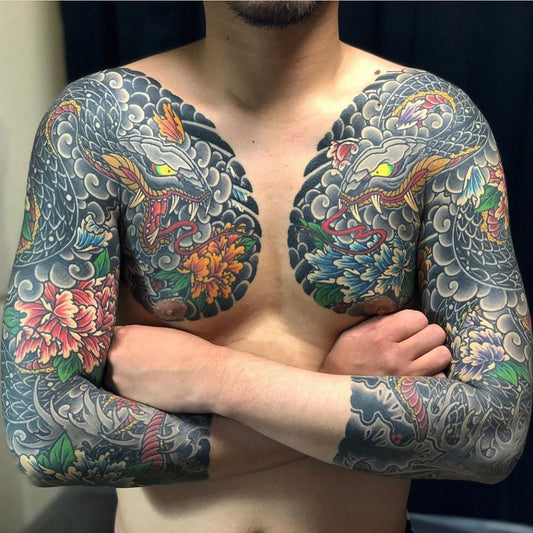
Snakes have positive and negative connotations, similar to the Hannya, and thus why they are often paired together. Snakes can symbolize protection from illness and bad luck, especially given the...
Snake (蛇)
Snakes have positive and negative connotations, similar to the Hannya, and thus why they are often paired together. Snakes can symbolize protection from illness and bad luck, especially given the...
Kintaro (金太郎)
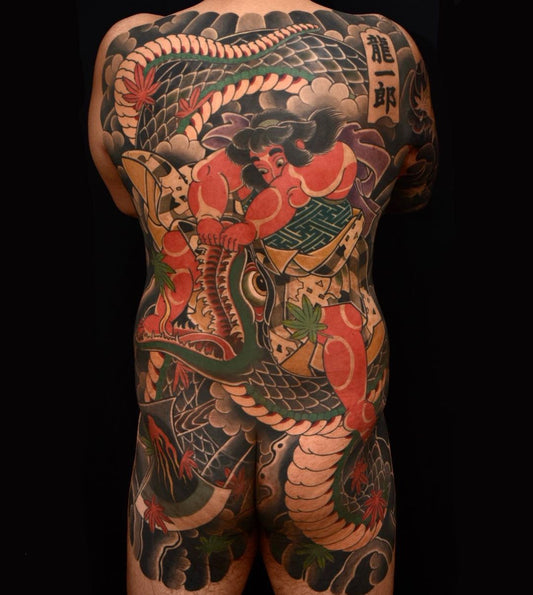
Kintaro or the "Golden Boy" is often depicted as a red-skinned boy fighting a black carp. There are competing origin stories, but they all seem to agree that he was...
Kintaro (金太郎)
Kintaro or the "Golden Boy" is often depicted as a red-skinned boy fighting a black carp. There are competing origin stories, but they all seem to agree that he was...

Suimon Yaburi (水門破り)
Suimon Yaburi translates to "Breaking the Floodgate" and is popular scene in the Suikoden novel. The scene depics Rori Hakucho Chojun (浪裡白跳張順) blade in mouth, breaking open a floodgate while...
Suimon Yaburi (水門破り)
Suimon Yaburi translates to "Breaking the Floodgate" and is popular scene in the Suikoden novel. The scene depics Rori Hakucho Chojun (浪裡白跳張順) blade in mouth, breaking open a floodgate while...
Peony (牡丹)
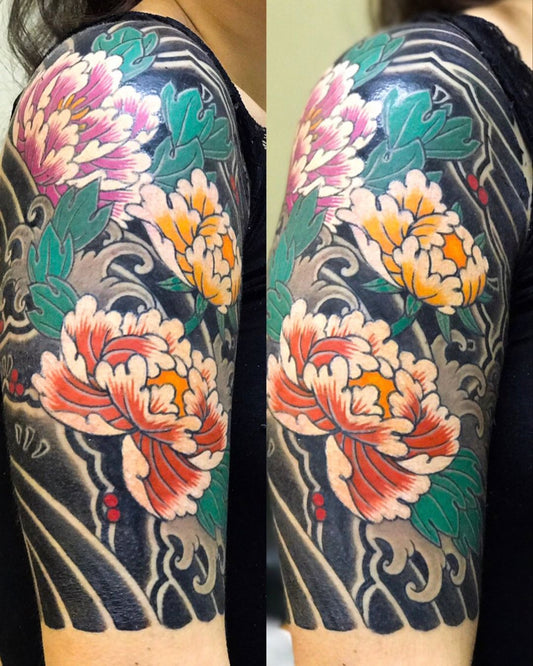
The peony or botan is a flower that has a short bloom period between the late spring and early summer. Called the "King of Flowers", the peony symbolizes nobility, honor,...
Peony (牡丹)
The peony or botan is a flower that has a short bloom period between the late spring and early summer. Called the "King of Flowers", the peony symbolizes nobility, honor,...

Karajishi (唐獅子)
Karajishi or "Chinese Lions" symbolize strength, bravery, auspiciousness and prosperity. Karajishi can usually be found at temple entrances, sometimes in pairs or accompanied by the Koma Inu or "Korean Dog"...
Karajishi (唐獅子)
Karajishi or "Chinese Lions" symbolize strength, bravery, auspiciousness and prosperity. Karajishi can usually be found at temple entrances, sometimes in pairs or accompanied by the Koma Inu or "Korean Dog"...

Kirin (麒麟)
Kirin are auspicious creatures, whose presence is a sign of good fortune. According to Buddhist mythology, the Kirin will not eat living things or even walk on grass, so as...
Kirin (麒麟)
Kirin are auspicious creatures, whose presence is a sign of good fortune. According to Buddhist mythology, the Kirin will not eat living things or even walk on grass, so as...